
Civil Service Lodge No. 148 has counted among its members men who made significant contributions to Freemasonry, public service, Confederation, science, surveying, architecture, music, sport, and civic life. The following selection highlights some of the Lodge’s most historically significant members.
Fathers of Confederation & National Public Life
The Right Honourable Sir John A. Macdonald
First Prime Minister of Canada, Father of Confederation
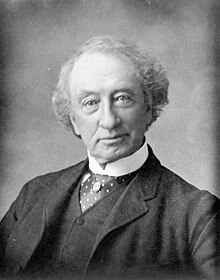
Born in Glasgow, Scotland, R.W. Bro. Sir John Alexander Macdonald, Father of Confederation, was a lawyer and Conservative M.L.A. for the United Province of Canada from 1844 to 1867 and Canada’s First Prime Minister from July 1, 1867 to November 5, 1872. He was re-elected on October 17, 1878 and served until his death on June 6, 1891. He was knighted for his efforts in bringing about Confederation. Sir John was an Honourary Grand Senior Warden of the Grand Lodge of Canada in the Province of Ontario. Originally a member of Ancient St. John’s Lodge No. 3 in Kingston, Ontario, he joined our lodge on May 11, 1869 and was made an Honourary Lifetime Member on July 8, 1869. His signature can be seen on the original Lodge By-laws.

The Honourable John H. Gray
Lawyer, Politician & Judge, Father of Confederation
Born in St. George, Bermuda, Bro. John Hamilton Gray became a lawyer in 1836, and is considered one of the Fathers of Confederation. Politically, he became leader of the New Brunswick Conservatives in the legislative assembly and found himself leader of the opposition after the 1854 elections. In 1855, the government collapsed and he was asked to form an administration. As Premier, he led the Conservatives to victory in 1856 on an anti-prohibition platform and repealed the liquor law. In 1864, Bro. Gray became an active supporter of Canadian confederation and joined Samuel Leonard Tilley’s new Liberal-Conservative party. He served as a delegate to the Charlottetown Conference, returning to New Brunswick to face growing hostility to the confederation project. In 1872, he was granted a judgeship in the Supreme Court of British Columbia. Bro. Gray joined our lodge on January 10, 1871.
The Honourable Justice William A. Henry
Supreme Court of Canada, Father of Confederation
Born in Halifax, Nova Scotia, Bro. William Alexander Henry was a lawyer, politician and Supreme Court Judge. During the late 1830s he studied law and was admitted to the bar as an attorney in 1840 and a barrister in 1841. Active in politics, he was a Member of the 23rd General Assembly of Nova Scotia from 1840 to 1843 and again from 1847 to 1867. On May 11, 1864, he became Attorney General in the government of Charles Tupper. Bro. Henry attended the three Confederation conferences and enthusiastically promoted the movement at home. As a Father of Confederation, he was a delegate to the London Conference of December 1866, at which the form of confederation was finalized, and was one of the attorneys general who helped frame the language of the British North America Act. He served as Mayor of Halifax from 1870 to 1871, and in October 1875 he was appointed a judge of the newly created Supreme Court of Canada. Bro. Henry joined our lodge on March 13, 1883.


William B. Lindsay Jr
First Clerk of the House of Commons, Charter Member
Born in Quebec City, Bro. William Burns Lindsay Jr, was Clerk of the Legislative Assembly of the Province of Canada, which consisted of the former provinces of Lower Canada and Upper Canada. At Confederation, he became the first Clerk of the House of Commons in Ottawa, an office he retained until 1872. Bro. Lindsay came from a long dynasty of legislative clerks. His father, William Burns Lindsay Sr, was clerk of the Legislative Assembly of United Canada after 1841. His grandfather, also named William, was clerk of the Lower Canadian House of Assembly, and also served, in 1799, as justice of the peace for the district of Quebec. Originally a member of St. George Lodge No. 440, Montreal, Grand Registry of England, Bro. Lindsay joined our lodge on the night of our institution, May 14, 1861, and became our first Director of Ceremonies.
The Honourable Albert E. Matthews
Lieutenant Governor of Ontario
Born in Lindsay, Ontario, Bro. Albert Edward Matthews became an investment broker in Toronto, and later a company director. He was a member of the McMaster Board of Governors from 1923 to 1948 in Hamilton and became Chairman of the University in 1949. Bro. Matthews served as the 16th Lieutenant Governor of Ontario from 1937 to 1946. He took office during the Great Depression while Mitchell Hepburn was Premier of Ontario. Hepburn had come to office promising to show austerity by curtailing the perks and privileges of, among others, the lieutenant-governor. As a result, Bro. Matthews did little entertaining but he gave vast sums of money to charities to help ease the burden of the Depression. Bro. Matthews was initiated into our lodge on March 13, 1909.


Gordon C. Edwards
Lumber Merchant, Member of Parliament
Born in Thurso, Quebec, Bro. Gordon Cameron Edwards became a member of First Baptist Church in 1883, and was a generous benefactor throughout his lifetime. He helped to found the Laurentian Club, he was Liberal Member of Parliament for the City of Ottawa from 1926 to 1930, and director of the Canadian Bank of Commerce, the Canada Cement Company, the Canadian International Paper Company, and the Ottawa Valley Trust Company. In 1921, Bro. Edwards inherited 24 Sussex Drive, and was the last private citizen to live there. 24 Sussex Drive became the Official Residence of the Prime Minister of Canada in 1950. It was said at his funeral that ‘he was known across the Dominion, and nowhere more than in his own city, as a supporter of good causes’. Bro. Edwards joined our lodge on October 13, 1894.
Founders and Early Lodge Builders
James H. Rowan
Civil Engineer, First Worshipful Master, Charter Member
R.W. Bro. James Hill Rowan, was Engineer-in-Charge, Eastern Section, with the C.P.R. survey in Manitoba. He was among a group of C.P.R. officials who gave unqualified preference to Sir Sandford Fleming’s proposal of the division of the day into a single series of hours numbered from one to twenty-four, thereby establishing the system of 24-hour railway time. A Past Master of St. John’s Lodge No. 491, Kingston, he was installed as our first Worshipful Master on May 14, 1861. He served again as Worshipful Master in 1862, and as Secretary from 1863 to 1864. In 1865, he was appointed Grand Steward, and served a third term as Worshipful Master in 1866. In February, 1866, R.W. Bro. Rowan, Acting District Deputy Grand Master, Quebec District, assisted R.W. Bro. Thomas D. Harington (Roll No. 36), Acting Grand Master, and other Brethren of Civil Service Lodge in the laying of the cornerstone of St. James Church in Hull, Quebec.


Alexander J. Cambie
Patent Clerk Department of Agriculture, Grand Junior Warden, Charter Member
R.W. Bro. John Walsh, Grand Junior Warden, was employed by the civil service, and was sponsored into our lodge by R.W. Bro. Alexander Jeffrey Cambie (Roll No. 6). He served as secretary from 1870 to 1871, succeeding Bro. George C. Reiffenstein. In 1872, he became Junior Warden, with Bro. William Morgan Goodeve assuming the duties of secretary. R.W. Bro. Walsh served as Worshipful Master in 1875 and again in 1876. For the next 35 years, he faithfully fulfilled the duties of Treasurer. At the 1886 Annual Communication of the Grand Lodge of Canada, he was appointed Grand Representative to the Grand Lodge of the United States of Columbia. On January 9, 1894, he was elected an Honourary Life Member of the lodge. R.W. Bro. Walsh was initiated into our lodge on December 8, 1868.
Rev. William A. Adamson
Doctor of Divinity, Chaplain & Librarian, Charter Member
V.W. Bro. Rev. William Agar Adamson was born in Dublin and became chaplain and librarian to the Legislative Council of the Province of Canada, a position he held until 1867 when he became librarian to the Senate. While living in Western Ireland, he learned to enjoy angling, especially salmon fishing, an interest that would shape his life in Canada. Arriving in Canada in 1841, he was the first rector of the parish of Amherst Island. During his career, he was assistant to Christ Church Cathedral in Montreal and in Ottawa. He also served as secretary of the Church Society of the Diocese of Quebec, and was an evening lecturer at the cathedral in Quebec City. As a preacher, he was described as ‘one of the most eloquent in North America’. As a fisherman, he wrote on the subject in his book Salmon-fishing in Canada, published in 1860. Several universities awarded him honorary Doctor of Civil Law degrees, including McGill University and the University of Bishop’s College. Rev. Bro. Adamson joined our lodge on May 14, 1861 and became our first Lodge Chaplain.


Thomas D. Harington
Grand Master, Grand Lodge of Canada
M.W. Bro. Thomas Douglas Harington’s early life was spent in the service of the Royal Navy, and the Honourable East India Company’s navy. Born in Windsor, England, he came to Canada in July 1832 and joined the civil service, rising to the position of Deputy Receiver-General for the United Provinces of Upper and Lower Canada. In 1858, he was reappointed under the Dominion of Canada, an office he held until his retirement. He was initiated into Freemasonry on December 13, 1843, in Duke of Leinster Lodge No. 283 in Kingston and served as Grand Master of the Grand Lodge of Canada from July 1860 to July 1863. In 1861, Warrant No. 145 was issued by him to form Civil Service Lodge No. 148 in Quebec City. In 1865, the lodge moved with the government to Ottawa. M.W. Bro. Harington joined our lodge on June 9, 1863.
John Walsh
Grand Junior Warden
R.W. Bro. John Walsh, Grand Junior Warden, was employed by the civil service, and was sponsored into our lodge by R.W. Bro. Alexander Jeffrey Cambie (Roll No. 6). He served as secretary from 1870 to 1871, succeeding Bro. George C. Reiffenstein. In 1872, he became Junior Warden, with Bro. William Morgan Goodeve assuming the duties of secretary. R.W. Bro. Walsh served as Worshipful Master in 1875 and again in 1876. For the next 35 years, he faithfully fulfilled the duties of Treasurer. At the 1886 Annual Communication of the Grand Lodge of Canada, he was appointed Grand Representative to the Grand Lodge of the United States of Columbia. On January 9, 1894, he was elected an Honourary Life Member of the lodge. R.W. Bro. Walsh was initiated into our lodge on December 8, 1868.

Military and Civic Service
Lieutenant-Colonel Brown Chamberlin
Lawyer, Publisher & Politician, Order of St. Michael and St. George
Born in Frelighsburg, Lower Canada, Bro. Brown Chamberlin studied at McGill College and was called to the bar in 1850. He worked as a journalist, and was publisher of the Montreal Gazette from 1853 to 1867. Bro. Brown rose to fame as a military leader during the Fenian raids in Canada East, where he served as lieutenant-colonel in the local militia and was named a companion of the Order of St. Michael and St. George for his role in repelling Fenian raiders at Eccles Hill. As a Conservative member of the Canadian House of Commons, he represented Missisquoi from 1867 to 1870. A friend of Sir John A. Macdonald, he was awarded the position of Queen’s printer in Ottawa in 1870 and the same year married Agnes Dunbar FitzGibbon, daughter of Susanna Moodie. Bro. Chamberlin joined our lodge on September 13, 1870.


Lt. Col. Agar S. A. M. Adamson
Military Commander, Distinguished Service Order
Bro. Agar Stewart Allan Masterson Adamson, constantly pushing the borders of danger and adventure, volunteered for service in South Africa during the Boer War. The grandson of Bro. William Agar Adamson (Roll No. 18), he had been a militia officer in the Governor-General’s Foot Guard and became a commissioned officer in Lord Strathcona’s Horse. Landing in Cape Town in May 1900, he wrote letters home to his wife, leaving a marvelous record of what he saw of men – and women – in action. In October 1916, Bro. Adamson became commanding officer of Princess Patricia’s Canadian Light Infantry, successfully and skillfully leading his regiment at both Vimy Ridge and Passchendaele. He earned the D.S.O. for gallantry in action, and again left a wealth of letters. After the war he became a flying enthusiast. In 1929, his plane ditched in the Irish Sea, he contracted pneumonia, and died at the age of 63. Bro. Adamson joined our lodge on April 8, 1890.
Brigadier-General William St. P. Hughes, D.S.O.
Superintendent Canadian Penitentiary System
Born in Cartwright Township, Ontario, Bro. William St. Pierre Hughes, brother of Sir Samuel Hughes, served with the 90th Regiment in the Northwest Rebellion of 1885, at the battles of Fish Creek and Batoche, and was a member of the expedition sent after Indian chief, Mistahimaskwa (Big Bear). Awarded the Northwest Canada Medal in 1885, Bro. Hughes was appointed as secretary to the warden of Kingston Penitentiary in 1893, and in 1913 he became the first Superintendent of the Canadian Penitentiary System. In May of 1915, he was the first Commanding Officer of the 21st Battalion which went overseas. Some 3,328 were killed, wounded or went missing in action, eleven battle honours graced its colours, and over 300 medals and citations were earned. He was awarded the Distinguished Service Order in 1917. Bro. Hughes joined our lodge on May 11, 1920.

Architecture, Arts & Culture
John W.H. Watts
Architect, Designer & Artist
Bro. John William Hurrell Watts, born and trained in England, blurred the boundary between artist and architecture. Immigrating to Canada in 1874, he worked for the Chief Dominion Architect for 23 years. He produced illustrations for the Canadian Illustrated News, the Dominion Illustrated, George Monro Grant’s Picturesque Canada, and was the first curator for the National Gallery of Canada as well as a founding member of the Royal Canadian Academy. Ottawa lumber and railway baron J.R. Booth was so impressed with Bro. Watts’ work that in 1902 he commissioned a mansion at 252 Metcalfe Street, now proudly cared for by the Laurentian Club. He designed the house at 500 Wilbrod Street for Andrew Fleck, Secretary-Treasurer, Canada Atlantic Railway in 1903, now the residence of the Algerian Embassy. The oldest Jewish Synagogue in Ottawa, which was located on King Edward Avenue, was designed in 1904. In 1925, he designed Glebe Presbyterian Church/Glebe United Church at 650 Lyon Street South. Bro. Watts was initiated into our lodge on March 13, 1883.


Edgar L. Horwood
Architect
W. Bro. Edgar Lewis Horwood came to Ottawa from New York in 1893 and became Chief Architect of the Department of Public Works. In 1895, he designed the American Room, part of the Great Library of Osgoode Hall in Toronto. He is credited with designing Mutchmor Public School in 1895, the former Sun Life Building in 1897, First Avenue Public School in 1898, the Carnegie Library on Metcalfe Street in 1907, and an addition to Lisgar Collegiate Institute in 1907. His other works include St. Luke’s Hospital, the original Gilmore House, the Citizen Block, the Cory Block, the Ritz Hotel, the residences of George Goodwin and William Southam in Sandy Hill, the Bank Street Chambers and three of the four corners at the intersection of Bank Street and Sparks Street. In 1912, W. Bro. Horwood designed the Beaux-Arts Customs House in Montreal and the Chateau Monsarrat in Gatineau, Quebec in 1930. Together with Bro. Clarence Burritt (Roll No. 381), he designed the Justice Building in 1935. W. Bro. Horwood joined our lodge on December 11, 1894 and served as Worshipful Master in 1901. In 1951, he was presented with a long service medal for 50 years as a Past Master.
Clarence J. Burritt
Architect
Bro. Clarence James Burritt was born in Toronto, Ontario, and studied architecture at the University of Toronto. He designed the Palladian home of E.B. Eddy in Hull in 1901 which eventually became the site of Standish Hall. In 1914, he designed St. Paul’s Methodist Church in the Palladian Revival style. The church was converted to the Glebe Community Centre in 1974. Most significantly, in 1927 he designed the Confederation Building located on Parliament Hill which today is home both to civil servants and to a number of MPs and ministers. 190 Coltrin Road was designed in 1929 for the son and daughter of G. H. Millen, former president of the E. B. Eddy Company. After 1948, it served as the residence of the High Commissioner of Pakistan. In 1935, together with Bro. Edgar Horwood (Roll No. 225), he designed the Justice Building, which now houses offices of Members of Parliament. Bro. Burritt was initiated into our lodge on April 9, 1907.

Frederick W. Taylor
Professional Hockey Player, Order of the British Empire
Bro. Frederick Wellington ‘Cyclone’ Taylor was absolutely the grandest star and one of the most sought after hockey players of his time. Born in Tara, Ontario, he began playing hockey at the age of twelve and went on to play in two Stanley Cup championship games in 1909 and 1915, and scored 205 goals over a twenty-one year career. He played for the original Ottawa Senators from 1907 to 1909. During his playing days he was often referred to as ‘the Ty Cobb of hockey’. Governor General Albert Grey gave him the nickname ‘Cyclone’, based on his skating ability. Bro. Taylor was inducted into The Hockey Hall of Fame in 1945. In 1949, he was named as an Officer of the Order of the British Empire for outstanding service to the country and community. Bro. Taylor was initiated into our lodge on February 13, 1912.
Science, Surveying & Exploration
Henry J. Cambie
Civil Engineer & Surveyor
Born in Ireland, Bro. Henry John Cambie, younger brother to R.W. Bro. A.J. Cambie (Roll No. 6), came to Canada as a boy, and learned railroading and surveying with the Grand Trunk Railway. With the Confederation of Canada in 1867, the C.P.R. was contracted to build a transcontinental railway, which would link the new country and the adjacent colonies and territories of British North America. With the expansion of the railway into British Columbia, Bro. Cambie found himself as the chief surveyor for the C.P.R. in the province. In 1876, he was made chief surveyor of the C.P.R.’s Pacific Division, a position he would hold for the next four years, following which he was promoted to chief engineer. He was also involved in supervising the construction of the section between Savona and Craigellachie, and was at Craigellachie on the day of the last spike, November 7, 1885. He is visible in the famous ‘Last Spike’ photo. Bro. Cambie joined our lodge on April 11, 1876.

William Ogilvie
Commissioner of Yukon, Dominion Land Surveyor, Fellow Royal Geographical Society
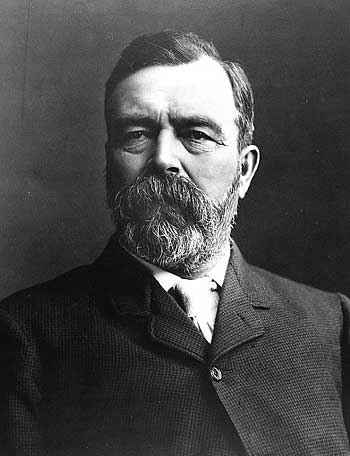
Born in Gloucester Township, Bro. William Ogilvie was a Canadian Dominion land surveyor, explorer and Commissioner of the Yukon Territory. He obtained his commission as a Dominion Land Surveyor in 1872, and spent his entire life surveying for the Department of the Interior. From 1887 to 1889, he was involved in George Mercer Dawson’s exploration and survey expedition in what later became the Yukon Territory. During the Klondike Gold Rush, he surveyed the townsite of Dawson City. He became the Yukon’s second Commissioner in 1898 at the height of the gold rush and was the author of ‘Early Days on the Yukon (1913)’. Bro. Ogilvie was elected a fellow of the Royal Geographical Society in recognition of his pioneering northern surveys. The Ogilvie Mountains and Ogilvie River in the Northern Yukon Territory along with Ogilvie Valey in the Southern Yukon Territory are named after him. Bro. Ogilvie was initiated into our lodge on February 8, 1887.
Albert P. Low
Geologist, Surveyor, Map Maker & Explorer, Geological Survey of Canada
Born in Montreal, Bro. Albert Peter Low graduated from McGill University in 1882, and worked as a surveyor and explorer with the Geological Survey of Canada (GSC) in Ottawa. His most important scientific work is considered to be his expedition to study the vast, unexplored Labrador Peninsula in 1894 and 1895. He participated in an expedition to Hudson Bay in 1897, and was in charge of exploring the Labrador side of Hudson Strait. His field reports, sketches and maps are still considered today as models of accuracy. He was appointed director of GSC in 1906, and in 1907 became the first Deputy Minister of the Department of Mines. Aplowite, a transparent, pink-coloured cobalt mineral, is named in his honour. Bro. Low was also an athlete, and played for two famous hockey teams, the McGill Hockey Club, considered the first organized hockey club in the world, and the Ottawa Hockey Club. Bro. Low was initiated into our lodge October 13, 1894.


Dr. Charles M. Sternberg
Paleontologist & Biostratigrapher, Fellow Royal Society of Canada
W. Bro. Charles Mortram Sternberg was born in Lawrence, Kansas, from a family of famous American fossil collectors. His father, Charles Hazelius Sternberg, is credited with discovering the world’s first dinosaur mummy. After moving to Canada, W. Bro Sternberg took over the scientific description of fossil vertebrates for the Geological Survey. He published 47 papers on fossil vertebrates, many based on his own remarkable discoveries. Late in his career, he collected and described Pachyrhinosaurus, Brachylophosaurus, Parksosaurus and Edmontonia. In 1949, he was elected a fellow of the Royal Society of Canada. He retired as assistant biologist to the National Museum of Canada in 1950 and later helped to set up Dinosaur Provincial Park in Alberta. Honourary degrees were given to him by the University of Calgary and Carleton University in Ottawa. W. Bro. Sternberg was initiated into our lodge on February 21, 1927 and served as Worshipful Master in 1949.
Herbert W. Beall
Forestry Engineer, Fellow Canadian Institute of Forestry, Order of Canada
Bro. Herbert Wilson Beall was born in Ottawa, and attended Queen’s University before becoming entranced by forestry research during a summer job at the Petawawa Forest Experiment Station. He transferred to the University of Toronto and graduated with a B.Sc.F. in 1932. The forest fire danger rating system, highly visible road signs that rate danger from ‘low’ to ‘extreme’, is one of Bro. Beall’s most visible legacies. He served as Chief of the Forestry Operations Division in the 1950s, Director of the Forestry Administrative Branch from 1961 to 1964 and special adviser to the Deputy Minister from 1965 to 1969. After retirement he was advisor to the International Development Research Centre in Africa and South America. Bro. Beall was initiated into our lodge on March 14, 1933 and received a 60 year long-service award in 1993. Shortly after his death, he was named an Officer of the Order of Canada.


Percy A. Taverner
Ornithologist & Taxidermist
Born in Guelph, Ontario, Bro. Percy Algernon Taverner first earned a living as an architectural draughtsman while studying birds in his spare time. A self-taught naturalist, he was the first ornithologist at the National Museum of Canada, now the Canadian Museum of Nature, and served as Assistant Naturalist and Curator. He became Chief of the Division of Ornithology in 1936, and retired in 1942 as Honorary Curator of Ornithology. Bro. Taverner helped establish Point Pelée National Park and a number of bird sanctuaries across Canada, including Bonaventure Island and Percé Rock in the Gulf of St. Lawrence. His ornithological writings culminated in Birds of Canada in 1934. The Taverner Cup, a 24 hour competitive birdathon held in eastern Ontario and western Quebec, is named after him. The Timberline Sparrow was given the name Spizella taverneri in his honour. Bro. Taverner joined our lodge on March 9, 1920.
Community and Masonic Service
Robbie David
William Mercer Wilson Award Recipient — Awarded March 10, 2009
Each year Robbie, through his two restaurants, has sponsored the Special Olympics Marathon in Ottawa by donating sandwiches and beverages for the volunteers. For each of the past ten or more years, he has supported T-ball teams for underprivileged children in the community. He assists in the local Ride for Dad fund raising campaign in support of prostate cancer treatment and research. He is a volunteer and supporter of the Terry Fox Run in Ottawa each year, and alone has raised over $10,000 for cancer research. Brother David’s devotion to the Craft is unflagging; a continuing source of guidance and inspiration to friends, neighbours and Brethren alike, he lives and presents his principles in such a fashion that men of goodwill everywhere are drawn to emulate his lifestyle. In the presence of Most Worshipful Brother Allan J. Petrisor, Grand Master; Right Worshipful Brother Raymond S.J. Daniels, Deputy Grand Master; Most Worshipful Brother Donald H. Mumby, Past Grand Master; Right Worshipful Brother David A. Ganderton, District Deputy Grand Master, and a delegation of honoured guests and visitors numbering in excess of 200, Brother David was presented with the William Mercer Wilson Medal for Meritorious Service. He is only the second member in the history of our lodge to receive this distinction. In 1961, the medal was awarded to Brother Arthur Morphy Hill.


The William Mercer Award
Named after M.W. Bro. William Mercer Wilson, the first Grand Master of the Grand Lodge of Canada, the William Mercer Wilson Medal is among the highest honours conferred upon a brother in this jurisdiction. Instituted in 1945, it is awarded for long, exemplary, and meritorious Masonic service, particularly to a brother who has not served as Worshipful Master and is not in line for that office. It recognizes one who represents the Craft well, seeks no reward or publicity, and labours quietly and faithfully within his lodge and community in the spirit of brotherly love and service.